
The Blog
From Power Struggles to Play
Key Takeaways
- Warm, one-on-one interactions with kids reduce power struggles, improve self-esteem, and prevent mental health issues
- Playing with your child has powerful benefits for improving attachment
- To learn new ways to play with your child, try some tips at the bottom of the article for more ideas about incorporating play with your child into your routine.
An exasperated father sat down with me for an intake. “My son seems to be set off by anything. Basic tasks like homework end in a screaming match. He yells that he hates me every other night, and I’m starting to think he means it. I know my son is really struggling, but sometimes it makes me so angry, I just start yelling.” I can hear the frustration and pain in his voice. While this father knew his son didn’t hate him somewhere deep down, it was hard to stay hopeful that things could run smoothly and that they could even feel closeness and joy again. He was utterly baffled. He was ready to try anything.
It’s not about the homework.
I asked him, “Do you ever get the sense that the meltdowns have nothing to do with the homework or the tasks? “Yes!” he said, “Sometimes what upsets him seems so random; there must be something underneath it all.”
“You are exactly right,” I said. Sometimes a child’s behavior hides a deeper need for structure, warmth, and security–all things that we can offer our children through play. I recommended bringing the family together for play-based family work that would culminate in the father conducting play sessions with his son at home.
The father was confused at first. “So playing with my son will help him do his homework, and not hate me anymore?”
Surprisingly, my answer was yes. He agreed to suspend his disbelief and give it a shot. He had already tried behavior charts, punishments, rewards, and nothing had worked.
As I began teaching this father how to use structured play sessions at home with his son, their story changed. We discovered that beneath all the angry bluster from the boy was a child yearning for connection who didn’t know how to express his emotions and needs. The boy’s eyes lit up when he knew that it was time to play with his dad, and the father was laughing again and having fun with his son. When it was time to do tasks, the boy still had strong feelings about them, but over time, the screaming died down, and he was more open to cooperation. And more importantly, this boy and his father felt truly close to one another and enjoyed each other’s company.
This family’s story is not unique. So many parents come to me at the end of their rope. They feel like lately their home life has been filled with resentment, yelling, and frustration. They worry that their attempts to manage difficult behaviors have gotten in the way of their connection with their child. And simply put, it’s not fun to have precious family time be fraught with conflict. No parent wants to feel like they are yelling all the time and getting nowhere.
The good news is: change is possible. One of my favorite parts of doing this work is seeing so much warmth and playfulness happening in the families and seeing the parents realize just how much their child wants to connect. I love seeing children perk up when they learn that their parent is coming to therapy with them.
“You mean they get to play?? In here??? With me?? You mean THEY have to learn something, not just me?”
It is utterly magical to watch parents learn that something that sounds so simple can completely change the game at home. Many parents are surprised that their child runs to them when it is time to do special playtime at home. “I thought he would rather play with the neighbors than hang with me.”
What I see over and over again is that this work is powerful and deeply meaningful to children. When they feel their deep need for connection being met, they are primed for learning and cooperation.
So why does building your relationship help?
Because our brains are wired for connection, a very important part of our emotional regulation begins in childhood when we co-regulate. Co-regulation is the process in which a parent joins the child when they are suffering, comforts them, and then models a coping strategy. For children, coping is often simply connecting with a trusted adult and being listened to. When children feel disconnected, they are more prone to stress and have more difficulty with emotional regulation. A sense of security in our most fundamental relationships is a building block for mental health–without this, we aren’t able to develop more complex skills.
Expert play therapist, Lawrence J. Cohen, PHD, writes, “Disconnection is at the heart of many behavior problems. We often respond to bad behavior with isolation, time-outs, humiliation, hitting, slapping, threats, yelling, or withdrawal of love. These responses create even more disconnection, which is why they don’t work very well. Because disconnection happens, we need to become experts at reconnection.”
And how do we reconnect with our children? Play, of course!
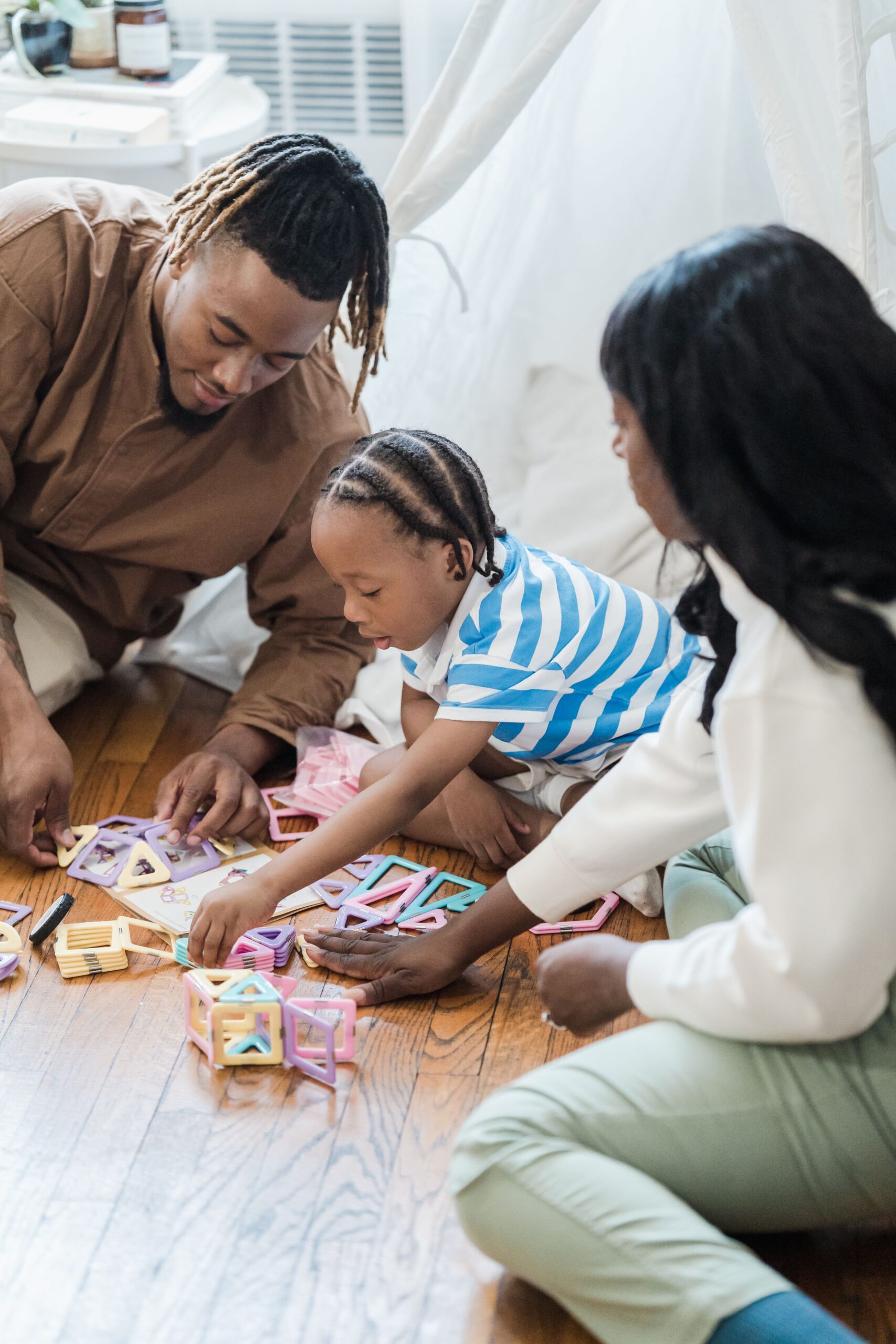
While play is often trivialized in our culture, it is an essential way that children’s brains develop in many areas, including social interactions, physical skills, academic competency, and imagination. And play has even more to offer when it comes to emotional health and creating lasting bonds. Play requires shared attention and for the parent to tune in to their child.
In an article in the American Journal of Pediatrics Ginsburg (2007) notes,
“When parents observe their children in play or join with them in child-driven play, they are given a unique opportunity to see the world from their child’s vantage point as the child navigates a world perfectly created just to fit his or her needs. ….. The interactions that occur through play tell children that parents are fully paying attention to them and help to build enduring relationships. Parents who have the opportunity to glimpse into their children’s world learn to communicate more effectively with their children and are given another setting to offer gentle, nurturing guidance.”
I’ve seen this work firsthand. When families come together in play, they flip the dynamic. A child experiences a parent giving their dedicated attention, and the parent notices and delights in their child. The parent who has been feeling like an imposter starts to understand that they don’t need all the answers. They just need to show up. The parent begins to finally feel confident after their long struggles with challenging behaviors.
As parents learn to structure and create one-on-one playtime for their children, the children relax and become more receptive to collaborating with their parents. They start to understand and communicate their feelings, and feel safe and supported. Parents use the tools they learn with other children in the family, and everyone benefits.
And an added bonus- play relieves stress. The laughter and sense of closeness it brings is one of nature’s great stress relievers. Not only is it good for your child, but it is good for you!
So, now that you are sold on the concept, how can you get started:
- Set aside dedicated time to play with your child for 20-30 minutes each week. Keep it on the same day and time so your child knows when it is happening.
- Keep it Simple: Allow your child to pick what to play with and join in.
- Classic Games like Mother May I and Red Light, Green Light help children with structure and impulse control, and bring a lot of laughs and fun.
- Attend a play workshop with me. These fun experiences curated by play therapists will help get the juices flowing, create lasting memories, and give you practical takeaways you can use at home.
- Schedule a consultation for family-play work with me.
Check out one of the linked resources below for even more ideas.
Resources to get you started:
Good Inside with Dr. Becky (n.d) How to Be a Playful Parent When You Don’t Feel Like Playing
Playful Parenting: An Exciting New Approach to Raising Children That Will Help You Nurture Close Connections, Solve Behavior Problems, and Encourage Confidence by Dr. Lawrence Cohen
Parenting with Theraplay: Understanding Attachment and How to Nurture a Closer Relationship with Your Child Helen Rodwell and Vivien Norris
St Louis Childrens Hospital (2016 December 15) The Best Way to Play With Your Kids
Minnesota Children’s Museum (n.d) Playful Parenting: Bringing Play to Every Day.
References
The Importance of Play in Promoting Healthy Child Development and Maintaining Strong Parent-Child Bonds
Kenneth R. Ginsburg, MD, MSEd; and the Committee on Communications; and the Committee on Psychosocial Aspects of Child and Family Health
Pediatrics (2007) 119 (1): 182–191.https://doi.org/10.1542/peds.2006-2697

